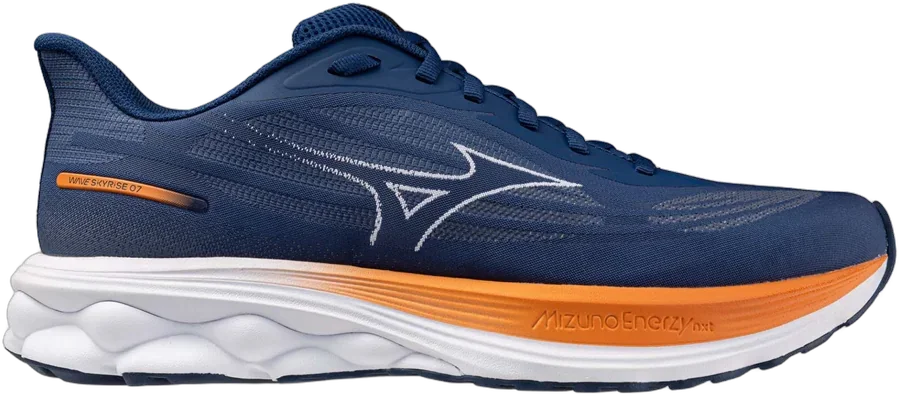
Which should you buy?
Choose the Wave Skyrise 7 if you want a roomy, comfortable shoe for easy miles, or room for orthotics.
Choose the Wave Rider 30 if you want more cushioning and stability, or need a wide fit.
The Wave Skyrise 7 is 14 g heavier than the Wave Rider 30. It has 5 mm less foam under the heel. It costs £10 less at full price.
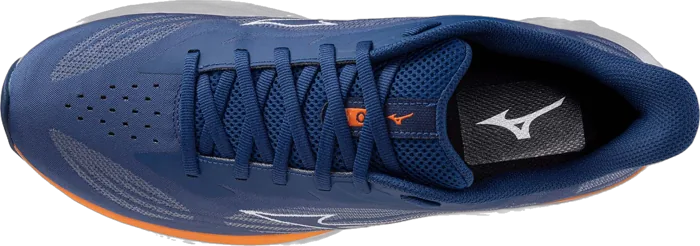
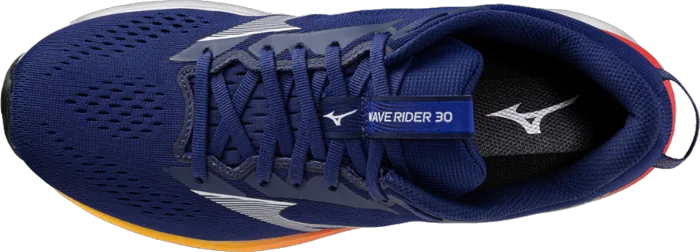
Side by side
| Spec | Wave Skyrise 7Mizuno | Wave Rider 30Mizuno |
|---|---|---|
| Review score | Not enough reviews yet | 88/100 (2 reviews) |
| Type | Daily trainer | Daily trainer |
| Weight (men's UK 8.5) | 280 g | 266 g |
| Heel stack | 37.5 mm | 42.5 mm |
| Drop | 8 mm | 8 mm |
| Cushioning | Balanced | Balanced |
| Bounce | Lively | Lively |
| Plate | No plate | No plate |
| Support | Neutral | Neutral |
| Fit | True to size | True to size |
| Widths | standard | standard, wide |
| Waterproof version | No | No |
| UK RRP | £130 | £140 |
Weights are for a men's US 9 / UK 8.5. Prices are UK RRPs; shops often sell for less.
What the critics say
The reviews comparedReviewers rate both as stable trainers but find neither especially energetic. Run Évasion's team and Laufschuhkauf's Wiesel found the Mizuno Wave Skyrise 7 dependable and comfortable, but short of pep for faster sessions. Road Trail Run's Sam Winebaum and Jen Schmidt praised the Mizuno Wave Rider 30's smooth Wave Plate, extra bounce and value, while RunRepeat's Carlos Sánchez found its energy return weak.
Wave Skyrise 7
- Comfortable, secure upper that breathes better than the last version
- Smooth, steady ride that stays comfortable on long easy runs
- Roomy toebox with space for orthotics
- A modest update: the main changes are to the upper
- Feels sluggish when you pick up the pace
- Out of its depth on soft, uneven or technical ground
Wave Rider 30
- Impressively stable and controlled
- Very good heel cushioning
- Midsole holds up on long runs
- Heavy
- Not very lively or propulsive
Scores from RunRepeat, Road Trail Run.
Paraphrased from published reviews.
What's new in each
Mizuno Wave Skyrise 7: A new, more open engineered mesh upper with thicker heel and collar padding and a wider, softer tongue; the Wave plate and 8 mm drop carry over.
Mizuno Wave Rider 30: Much more cushioned than the Wave Rider 29 (about 4 mm more at the heel, 6 mm at the forefoot), with the Wave Plate now hidden inside and a lower 8 mm drop.
About each shoe
About the Wave Skyrise 7
Cushioning is the priority for the Wave Skyrise 7, a neutral road trainer for everyday running that is described on its SportsShoes listing as offering softness, energy return and a lightweight feel. In Mizuno's cushioned range it sits alongside the Wave Rider 30 with a lower 37.5 mm heel stack, and below the higher-stacked Wave Sky 9.
The midsole uses Mizuno's Enerzy NXT foam, paired with a Mizuno Wave plate, and the shoe has an 8 mm drop. Most of the changes for this version are in the upper: a new, more open engineered mesh, thicker padding around the heel and collar, and a wider, softer tongue. It comes in a standard width only and, unlike the plated Neo Vista 3, uses a conventional cushioned set-up aimed at easy and moderate everyday mileage.
Specs and features from sportsshoes.com, en.zalando.de and our own spec data. A factual overview, not a review.
About the Wave Rider 30
Thirty generations in, the Wave Rider remains the neutral road trainer that Mizuno calls its legacy daily shoe, pitched at beginners and regular joggers looking for easy, everyday running. In the current range it sits between the plateless Neo Zen 2 and the taller Wave Sky 9, with the Wave Inspire 22 as its stability counterpart.
This version is rebuilt around a dual-layer midsole: nitrogen-infused Enerzy NXT on top over a firmer Enerzy NXT base, with a full-length Mizuno Wave Plate embedded inside. Mizuno says it is the first full-length plate in the shoe's 30-year history. The base is 14 mm wider at the midfoot than the Wave Rider 29, which the brand says adds stability without extra weight, and X10 carbon rubber covers the high-wear zones. The heel stack rises to 42.5 mm with an 8 mm drop, and a wide fit is offered alongside the standard version.
Specs and features from emea.mizuno.com, marathonsports.com and our own spec data. A factual overview, not a review.
Wave Skyrise 7 vs Wave Rider 30
In short
Mizuno's two everyday trainers, both with an 8 mm drop. The Wave Rider 30 is 14 g lighter, much taller at 42.5 mm, £10 more and comes in a wide fit, and reviewers found it very stable but not lively. The Skyrise 7 is lower at 37.5 mm, and reviewers found it smooth and comfortable on easy runs with a roomy toe box, but sluggish at pace.
- LighterWave Rider 30
- CheaperWave Skyrise 7
- More foamWave Rider 30
- More widthsWave Rider 30
Get the full story
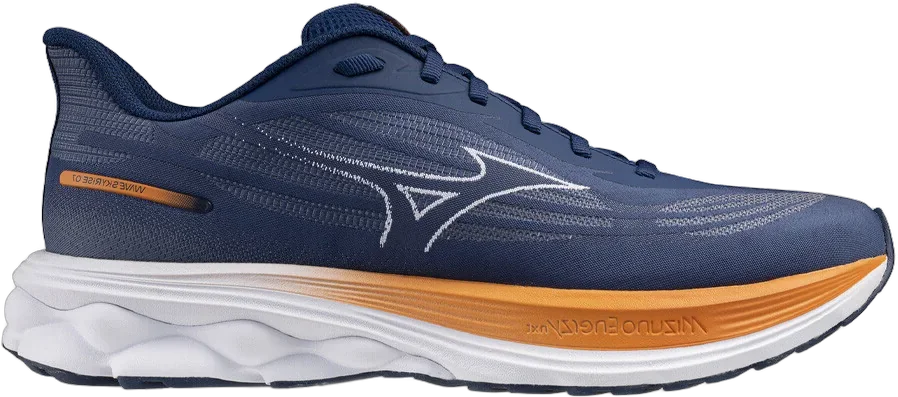
 MizunoEverything on the Wave Skyrise 71 video review, what critics loved and didn't, fit and sizing advice, full specs and today's prices.Explore the Wave Skyrise 7
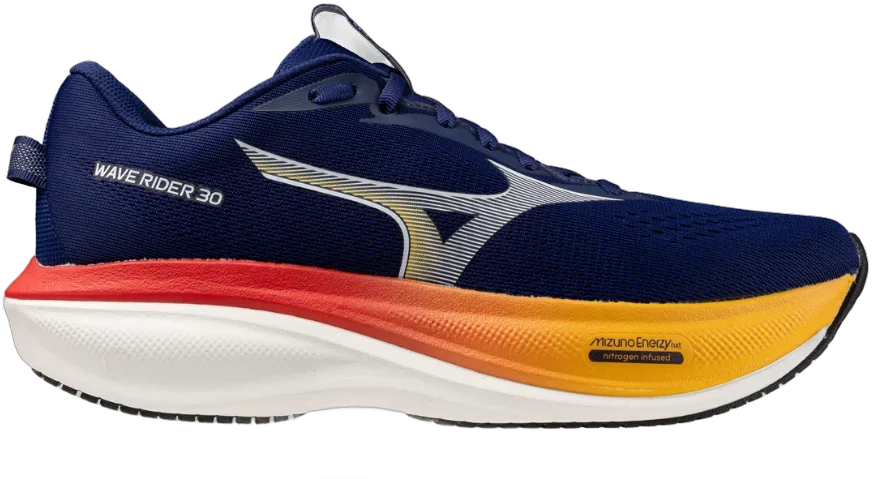 MizunoEverything on the Wave Rider 303 video reviews, scores from 2 published reviews, what critics loved and didn't, fit and sizing advice, full specs and today's prices.Explore the Wave Rider 30
More comparisons
Still torn?
The shoe finder checks every current shoe against how you run and shows your two best matches.