Why shoe reviews read like a foreign language
Read a few running shoe reviews and you’ll meet phrases like “improved heel lockdown”, “a semi-gusseted tongue” and “a better-bevelled heel”. They’re useful once you know what they mean, because they tell you exactly where a shoe will feel good or rub.
This guide labels every part of a running shoe, from the heel tab to the outsole, then decodes the fit and ride terms reviewers use. The examples come from the published reviews behind the shoes on RunShoeRotation.
The upper: everything that holds your foot
The upper is the fabric part of the shoe. Its job is to hold your foot securely on the sole without rubbing, squeezing or overheating.
| Part | What it is | What reviews say about it |
|---|---|---|
| Upper material | The main fabric: engineered mesh, knit, woven or monomesh | Breathability, stretch and how well it holds you. Knits feel sock-like but can stretch; wovens and monomesh hold their shape |
| Toe box | The front of the upper, where your toes sit | “Roomy”, “tapered”, “pointy” or “shallow”. Room to splay your toes matters more as your feet swell on long runs |
| Toe bumper | A reinforced strip around the tip | Protects the toes and stops the mesh wearing through. Important on trail shoes |
| Overlays | Extra layers welded or stitched onto the mesh | Add structure and protection, but can create stiff spots or pressure points |
| Laces and eyelets | Lace holes or loops, plus the laces themselves | Laces that stay tied, and whether the eyelets let you adjust the fit. Some racers use flat, grippy “sawtooth” laces |
| Tongue | The flap under the laces | Padding, and whether it slides around. A gusseted tongue is stitched to the sides of the upper so it can’t slip |
| Collar | The padded opening around your ankle | Comfort around the ankle bone and Achilles. Too much padding can feel hot; too little can rub |
| Heel counter | A stiffened cup inside the back of the shoe | Holds your heel in place. “Stiff” counters feel secure; “flexible” or no counter feels freer but less locked in |
| Heel tab | The loop or fin at the top of the heel | Helps you pull the shoe on, and some flare away from the Achilles to avoid rubbing |
| Sockliner | The removable insole your foot sits on | Extra step-in comfort. You can swap it for a custom orthotic |
Gusseted tongues
A gusseted tongue is joined to the sides of the upper, usually with stretchy fabric, so it stays centred. Semi-gusseted means it’s attached for part of its length. Non-gusseted tongues are lighter and easier to get on, but can slide sideways. The Adidas Boston 13 gained a semi-gusseted tongue, the Brooks Hyperion Max 4 a fully gusseted one, while the Hoka Clifton 11 moved to a simpler non-gusseted tongue to save weight.
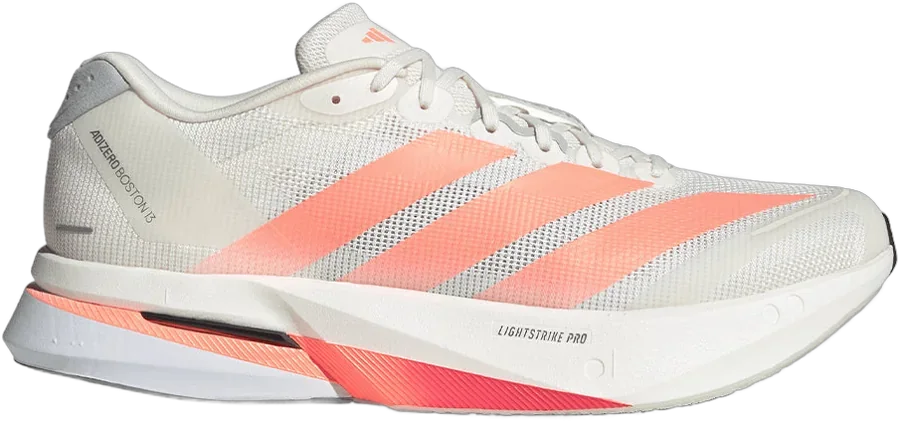
 adidasAdizero Boston 13Super trainer91/100 · 2 reviews
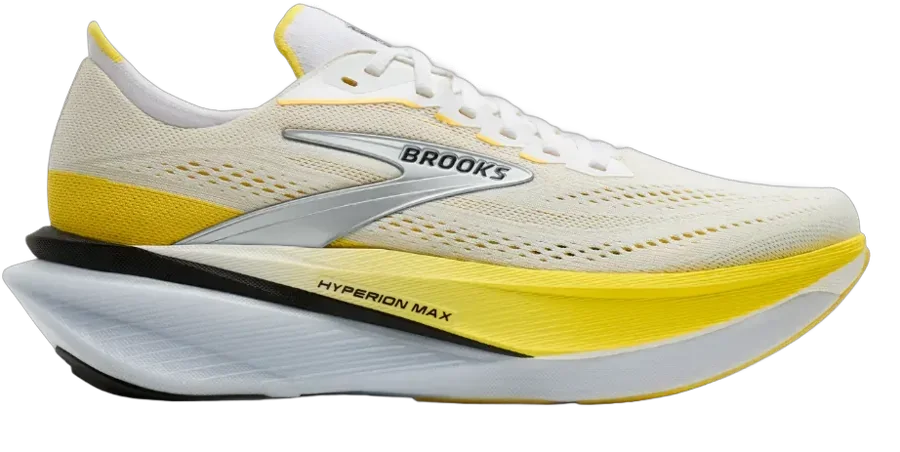
 BrooksHyperion Max 4Super trainer88/100 · 2 reviews
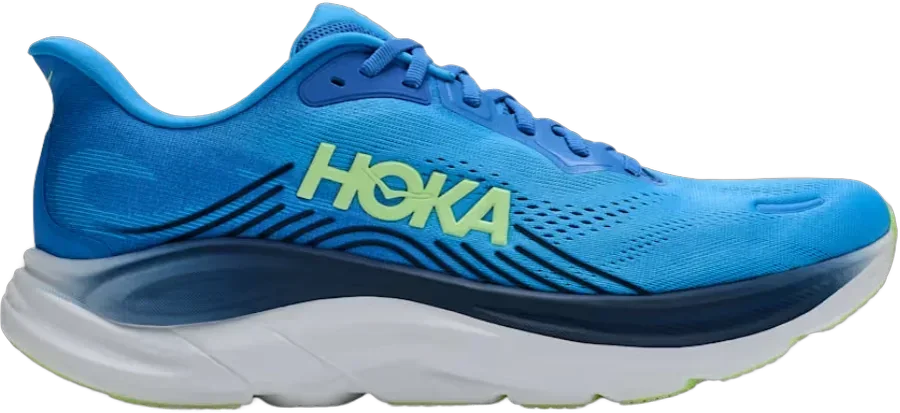
 HOKAClifton 11Daily trainer87/100 · 2 reviews
Inside the shoe
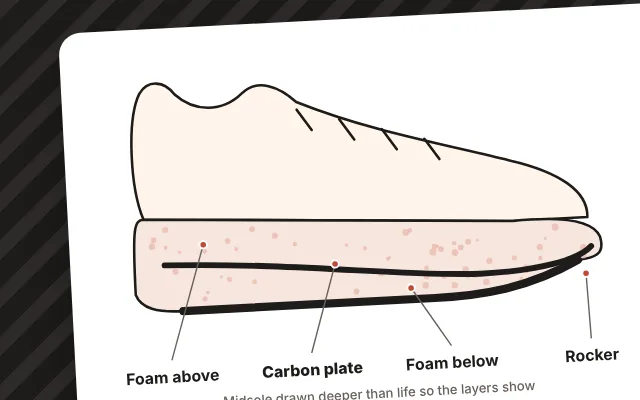
Between your foot and the road sit four layers. Reviews rarely mention the middle two, but they shape how the shoe feels.
- Sockliner (insole): a thin, removable foam layer. A plusher sockliner, like the one in the Brooks Ghost 18, adds step-in softness.
- Strobel board (lasting board): a fabric or foam sheet stitched across the bottom of the upper. Some shoes use a foam strobel for extra softness right under the foot.
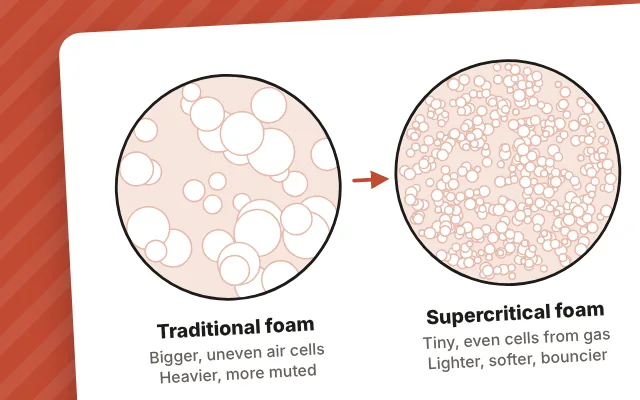
- Midsole: the cushioning foam, sometimes with a plate inside. Our foams explainer and plates explainer go deeper.
- Outsole: the rubber on the bottom.
The sole: shape and stability features
The midsole’s shape matters as much as its foam. These are the terms reviews use to describe it.
| Term | What it means |
|---|---|
| Stack height | How much material sits under your heel and forefoot, in millimetres. High stack means more cushioning but less ground feel |
| Drop (offset) | Heel stack minus forefoot stack. Low drop (0–4mm) puts more load on the calves and Achilles; higher drop (8–12mm) favours heel strikers |
| Rocker | A curved sole that rolls you forward instead of bending. Common in high-stack and plated shoes |
| Toe spring | How far the toe curves up off the ground. Part of a rocker |
| Heel bevel | A rounded or angled-off back edge, so heel strikers land smoothly instead of slapping down |
| Flare | The sole spreading wider than the upper at the heel or forefoot. Adds stability, but can feel clumsy |
| Platform width | How wide the sole is overall. Wider usually means more stable |
| Sidewalls | Foam raised up around the edges of the foot, cradling it for stability |
| Medial post / guide rails | Stability features. A medial post is firmer foam under the arch side; guide rails (Brooks’ GuideRails) are raised walls that keep the heel and knee tracking straight |
| Cut-out or channel | A groove down the middle of the sole. Saves weight and can help the foot track straight |
A few real examples: the Asics Sonicblast 2 and On Cloudmonster 3 Hyper got “better-bevelled” heels in their latest versions, the Puma MagMax Nitro 2 trimmed its sole flare, and the Hoka Cielo X1 3.0 swapped side cut-outs for one central channel.
For stability, the Nike Structure Plus uses raised sidewalls, the Brooks Glycerin GTS 23 uses deeper GuideRails and the Adidas Supernova Solution 3 a medial post. See our best stability running shoes for more.
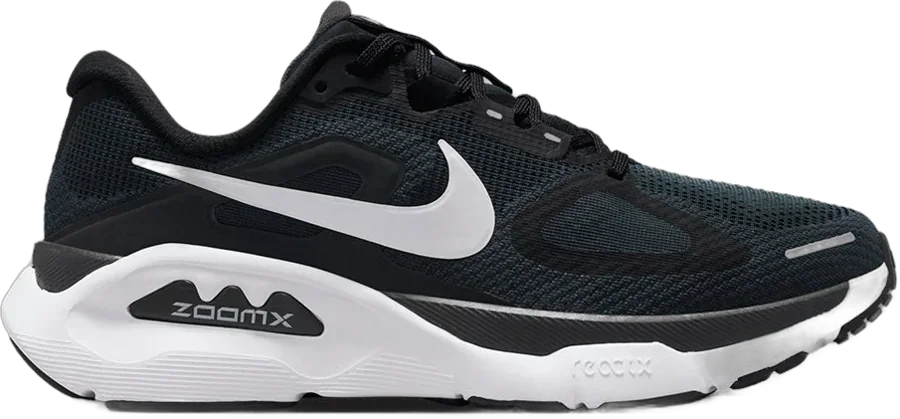
 NikeStructure PlusStability87/100 · 2 reviews
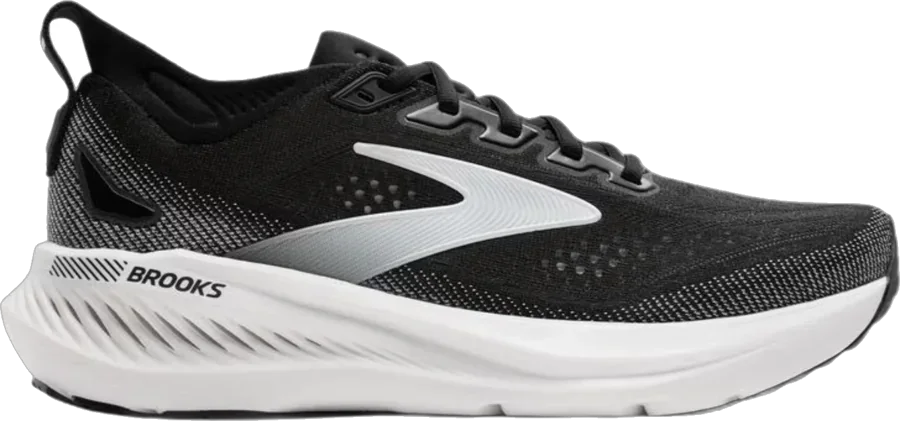 BrooksGlycerin GTS 23Stability93/100 · 1 review
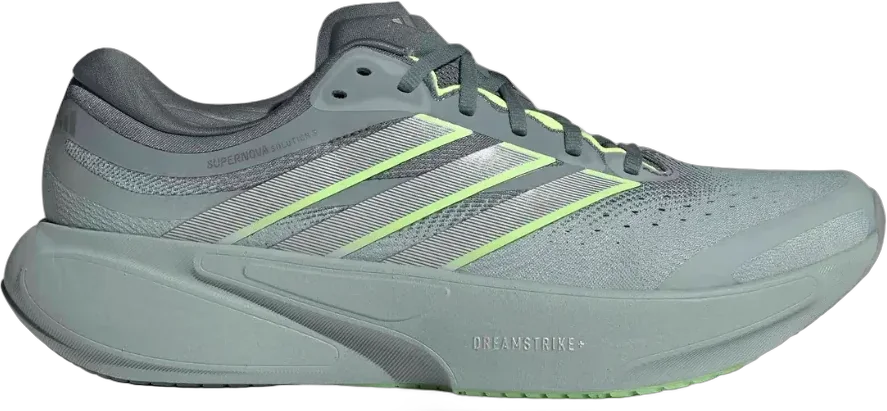 adidasSupernova Solution 3Stability88/100 · 2 reviews
The outsole: grip and durability
The outsole is the rubber on the bottom. Reviews judge it on grip (especially in the wet), durability and how much weight it adds.
- Rubber coverage: full coverage is grippy and durable but heavier. Racers often leave foam exposed to save weight, which wears faster.
- Flex grooves: cuts across the forefoot that help the sole bend, like those in the Merrell MTL Adapt.
- Lugs: the studs on trail shoes. Deeper lugs grip mud and loose ground but feel awkward on tarmac.
- Rubber brands: Continental (Adidas) and Vibram Megagrip appear in reviews as a mark of strong grip.
- Rock plate: a thin, stiff layer in trail shoes that stops sharp stones bruising your feet, like the woven rock plate in the Adidas Terrex Agravic 4.
Fit terms: what reviewers mean
Most fit jargon describes how securely the shoe holds you, and where it leaves room.
Lockdown
Lockdown means how securely the upper holds your foot onto the sole, so it doesn’t slide around on corners, descents or as you push off. Good lockdown comes from the laces, tongue, midfoot wrap and heel counter working together. “Improved heel lockdown”, as reviewers said of the Adidas Boston 13, means the back of the foot now stays put. Poor lockdown feels like your foot is swimming in the shoe.
Heel hold and heel slip
Heel hold is lockdown at the back of the shoe. Heel slip is the opposite: your heel lifts out of the shoe as you push off, which wastes energy and causes blisters. The Hoka Mach X 3’s update reshaped the heel collar and counter to cure its predecessor’s heel slip. If a shoe slips, try heel-lock lacing (see below) before giving up on it.
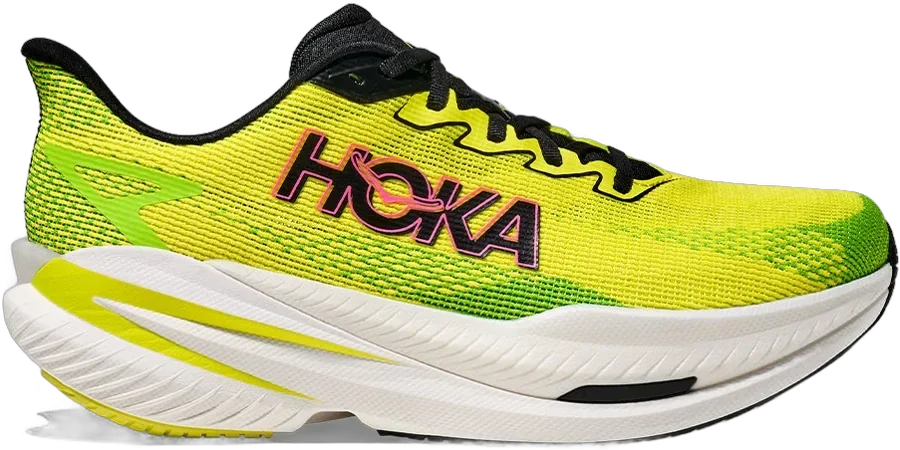 HOKAMach X 3Super trainer87/100 · 2 reviewsadidasAdizero Boston 13Super trainer91/100 · 2 reviews
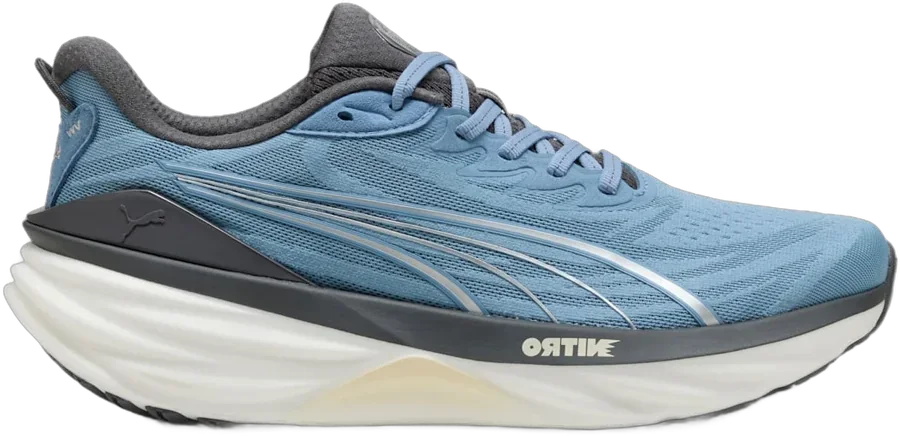
 PUMAForeverRun Nitro 3Stability
Midfoot hold or wrap
How snugly the middle of the upper wraps your arch and instep. Too loose and the foot slides; too tight and you get pressure on the top of your foot.
The rest of the fit vocabulary
- True to size (TTS): fits as your normal running shoe size. Most runners want about a thumb’s width between their longest toe and the end of the shoe.
- Runs small or long: sizing differs from normal. The Adidas Evo SL, for example, runs about half a size small, so reviewers suggest going up.
- Volume: how much space there is inside the shoe overall, especially in height. High-volume shoes suit deep or wide feet; low-volume shoes suit slim feet.
- Tapered or pointy toe box: narrows quickly towards the toes, like the racer-style fit of the Adidas Adios Pro 5. Roomy, foot-shaped toe boxes, like the Altra Olympus 7’s, suit wide feet.
- Widths: many shoes come in wide (2E for men, D for women) and extra-wide (4E) versions. See running shoes for wide feet.
- Hot spot: a small area of rubbing that could turn into a blister.
- Lace bite: pressure from the laces on the top of your foot, usually from a thin tongue.
- Break-in: how long a shoe takes to feel comfortable. Most modern running shoes need little or none; the Puma ForeverRun Nitro 3 was praised for needing none at all.
Ride and feel terms
“Ride” is the overall feeling of running in the shoe. These are the words reviews use to describe it.
| Term | What it means |
|---|---|
| Ride | The overall sensation underfoot, from landing to toe-off |
| Soft / plush | Sinks in noticeably when you land. Comfortable, but can feel slow or unstable |
| Firm | Little give underfoot. Feels stable and fast, but harsher on long runs |
| Bouncy / springy | The foam pushes back as it rebounds. Not the same as soft |
| Muted / dead | Absorbs impact without much rebound. Comfortable but unexciting |
| Responsive | Reacts quickly when you push the pace. Often means light and bouncy |
| Energy return | How much of the energy you put into the foam comes back |
| Transition | How smoothly you roll from heel or midfoot to toe-off. “Clunky” transitions feel slappy or stiff |
| Turnover | How quickly you can cycle your feet. Low, light shoes help quick turnover |
| Ground feel | How much you can sense the surface. More in low-stack shoes, less in max-cushion ones |
| Bottoming out | When the foam compresses fully and you feel the ground through it |
| Neutral | No added stability features. Suits most runners |
| Stability shoe | Has features (posts, rails, sidewalls) to limit the foot rolling inwards (overpronation) |
| Heel striker / forefoot striker | Which part of the foot lands first. Affects which drop and heel shape will suit you |
How to fix heel slip: heel-lock lacing
If a shoe fits well but your heel lifts, use the extra eyelet at the top that most running shoes have:
- Lace normally up to the second-to-last eyelet.
- Thread each lace into the top eyelet on the same side, leaving a small loop.
- Cross each lace over and pass it through the loop on the opposite side.
- Pull down and back to snug the collar around your ankle, then tie as normal.
This “runner’s loop” pulls the heel into the counter without tightening the rest of the shoe.
Running shoe terms: FAQs
What does lockdown mean in a running shoe?
How securely the upper holds your foot on the sole. Good lockdown means no sliding on corners or descents and no heel lifting as you push off.
What is a gusseted tongue?
A tongue stitched to the sides of the upper so it stays in place. Semi-gusseted tongues are attached for part of their length; non-gusseted ones are free.
What is a heel counter?
A stiffened cup inside the back of the shoe that holds your heel in place. Some racers use minimal or no heel counter to save weight.
What does true to size mean?
That you should buy your usual running shoe size. Most shoe pages on RunShoeRotation say whether reviewers found a shoe true to size, small or long.
What is the difference between cushioning and softness?
Cushioning is how much foam there is; softness is how much it gives. A shoe can have a high stack of firm foam, or a thin layer of very soft foam.
What does toe spring mean?
How far the toe of the sole curves up off the ground. It’s part of a rocker, which helps you roll through each step.
Sources
- Examples are drawn from the published reviews summarised on each RunShoeRotation shoe page (how we gather them).