Two very different jobs
A super shoe is built to make you as fast as possible on race day. A daily trainer is built to carry you comfortably through hundreds of miles of everyday running. Most runners who race benefit from both, but they are not interchangeable.
The gap between them has never been more visible. In April 2026, Sabastian Sawe ran the first sub-two-hour marathon in an official race wearing the £450 Adidas Adizero Adios Pro Evo 3, which weighs under 100g. The shoes most of us log our weekly miles in weigh more than twice that and cost a third of the price.
This guide breaks down what separates the two categories, what they have in common, and who each one is really for.
What is a super shoe?
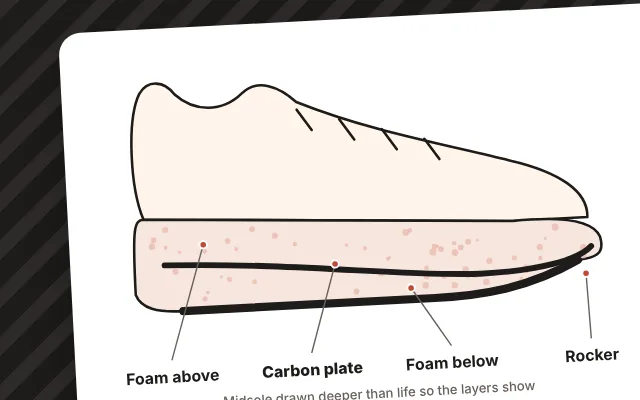
A super shoe is a lightweight racing shoe that combines three things: a high-rebound foam (usually PEBA, aliphatic TPU or TPEE), a stiff plate or rod system (usually carbon), and a tall, rockered midsole close to the 40mm legal limit. Nike’s Vaporfly 4% started the category in 2017; every major brand now makes one.
Current examples include the Nike Vaporfly 4 and the brand-new Alphafly 4, released on 29 October 2026, the Adidas Adizero Adios Pro 5, the Asics Metaspeed Sky Tokyo, the Saucony Endorphin Pro 5, the Puma Fast-R Nitro Elite 3 and the New Balance SuperComp Elite v6.
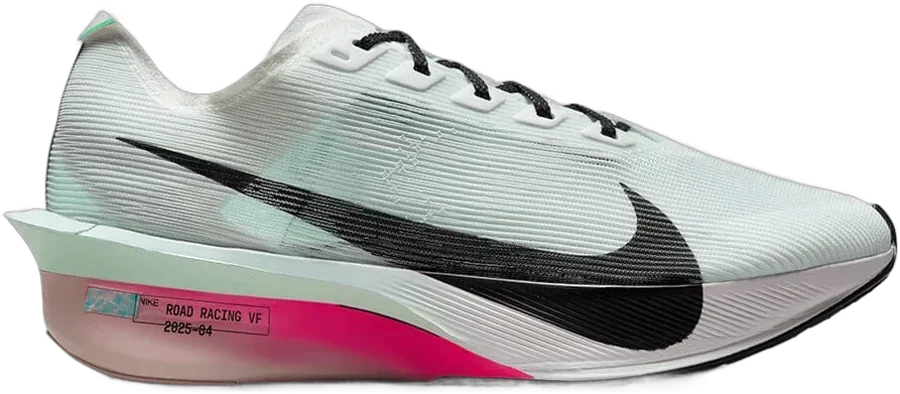
 NikeVaporfly 4Race day95/100 · 2 reviews
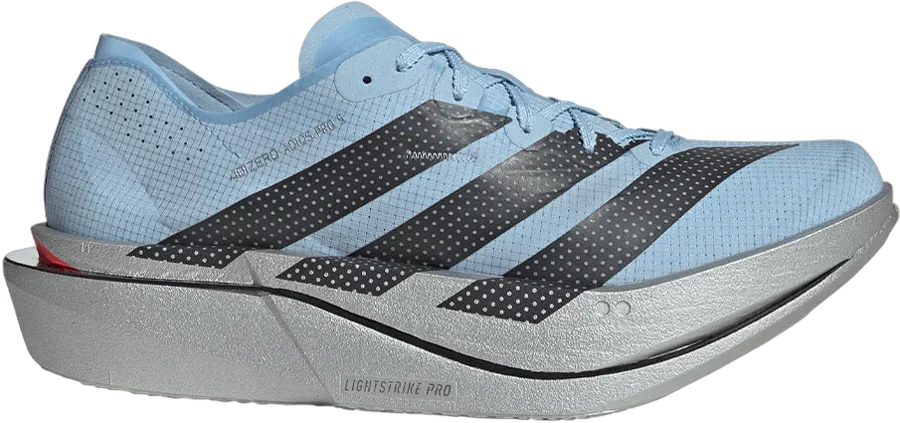
 adidasAdizero Adios Pro 5Race day94/100 · 1 review
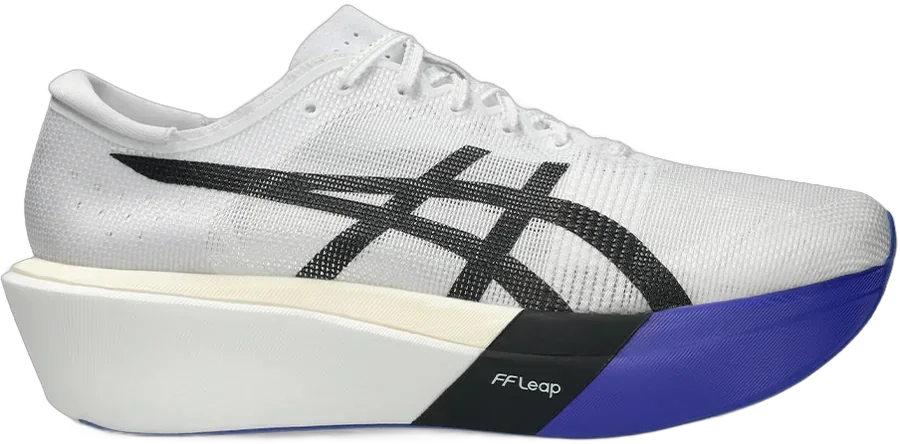
 ASICSMetaspeed Sky TokyoRace day95/100 · 2 reviews
What is a daily trainer?
A daily trainer is the workhorse of your shoe collection: the shoe you reach for on easy runs, steady runs, long runs and the occasional faster session. It prioritises comfort, durability, stability and value over outright speed. Most use EVA, TPU or blended foams, rarely have a rigid plate, and use more rubber on the outsole.
Current examples include the Brooks Ghost 18, Nike Pegasus 42, Saucony Ride 19, Hoka Clifton 11, Asics Novablast 6 and Mizuno Wave Rider 30. The Puma Velocity Nitro 5 is a strong value pick.
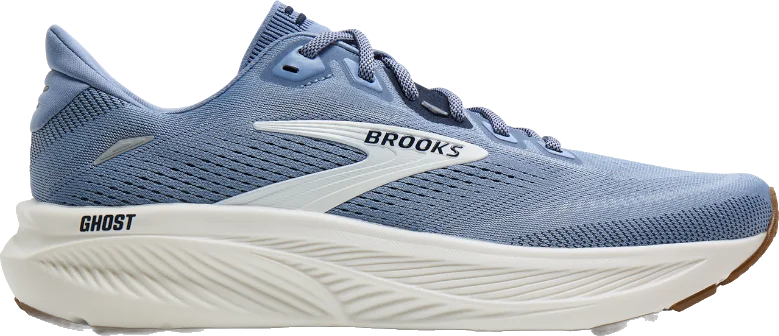
 BrooksGhost 18Daily trainer88/100 · 2 reviews
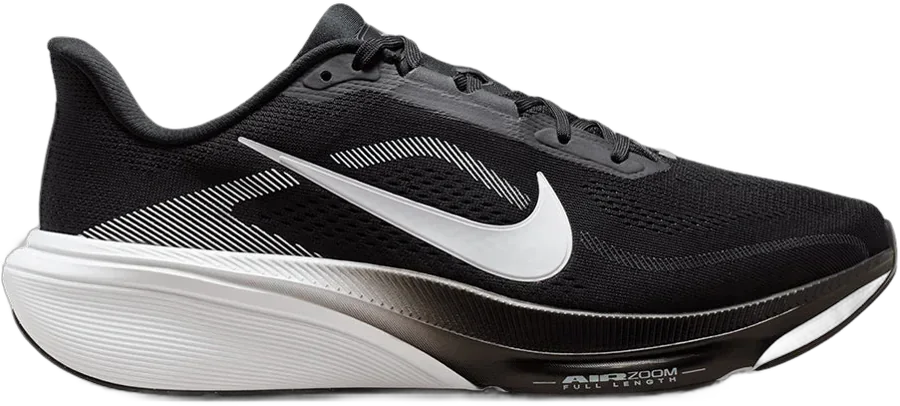 NikePegasus 42Daily trainer84/100 · 2 reviews
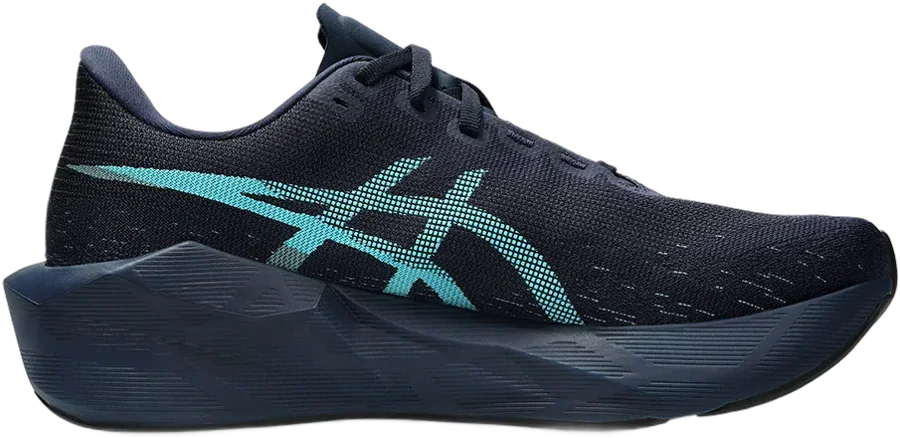 ASICSNovablast 6Daily trainer96/100 · 1 review
Super shoes vs daily trainers: the key differences
Super shoes trade durability, stability and price for weight savings and energy return. Daily trainers make the opposite trade. Across every current road model on RunShoeRotation, the typical racer is about 75g lighter and £105 dearer than the typical daily trainer.
| Super shoe | Daily trainer | |
|---|---|---|
| Foam | PEBA, A-TPU or TPEE superfoam | EVA, TPU or blends, increasingly supercritical |
| Plate | Carbon plate, rods or rim | Usually none |
| Heel stack | Median 39.5mm; capped at 40mm for racing | Median 37.5mm; some much taller |
| Weight (men’s UK 8.5) | Median 190g; the lightest under 100g | Median 264g |
| Outsole | Minimal rubber to save weight | More rubber for grip and wear |
| Upper | Thin, race-fit, often narrow | Padded, roomier, more supportive |
| Feel | Bouncy, propulsive, best at speed | Comfortable, predictable at all paces |
| Stability | Can feel wobbly, especially on corners or when tired | Wider, more planted base |
| Durability | Often retired sooner; many save them for races | Commonly quoted around 300–500 miles |
| UK RRP | Median £240; up to £450 | Median £135; £100–£170 |
Medians across the current road models on RunShoeRotation, October 2026.
Foam
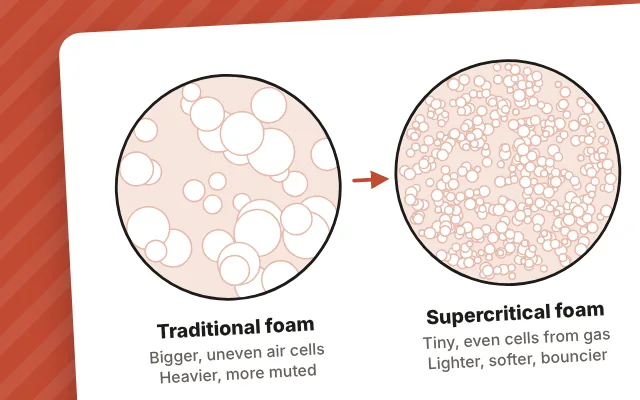
The foam is the biggest difference. Super shoes use the lightest, highest-rebound foams available. Daily trainers use foams chosen to last and stay stable. Our running shoe foams explainer has the full breakdown.
Plate
Nearly every super shoe has a stiff carbon plate, rods or rim. The plate mainly stabilises the soft foam and guides your roll forward. Most daily trainers are unplated and flex more naturally. Our carbon plates explainer covers the science.
Weight and durability
Super shoes shave weight wherever they can, including outsole rubber and upper padding, so they wear faster. Daily trainers carry extra grams in exchange for hundreds of comfortable miles.
Stack height
Surprisingly, this is no longer a big difference. Racers sit just under the 40mm limit, but many daily trainers are now nearly as tall, and some go well beyond it. The difference is what the stack is made of.
Pace range
Super shoes come alive at tempo and race pace, and research suggests their benefit shrinks at slower speeds. Daily trainers feel good across a wide range, especially easy and steady efforts.
How super shoes and daily trainers are similar
The line between the two is blurring, because race technology trickles down into training shoes every year.
- Modern foams everywhere. Supercritical foams, once reserved for racers, now appear in many daily trainers, making them lighter and bouncier than ever.
- Tall stacks and rockers. Many daily trainers now have high stacks and rockered soles that roll you forward, borrowing super shoe geometry.
- Same goal underneath. Both aim to reduce the effort of running: one for a few hours on race day, the other across a whole training block.
- Fit still comes first. A shoe that does not suit your foot will not help you, whatever category it sits in.
The middle ground: super trainers
Super trainers sit between the two. They use race-level foam in a more durable, stable package, sometimes with a plate and sometimes without. They are built for long runs, tempo runs and workouts, and some runners race in them.
Popular examples include the plateless Adidas Adizero Evo SL, Asics Superblast 3 and Asics Megablast, plus plated options like the Adidas Boston 13, Saucony Endorphin Speed 6, Puma Deviate Nitro 4, Nike Zoom Fly 6 and Mizuno Neo Vista 3. Our best super trainers guide ranks them all.
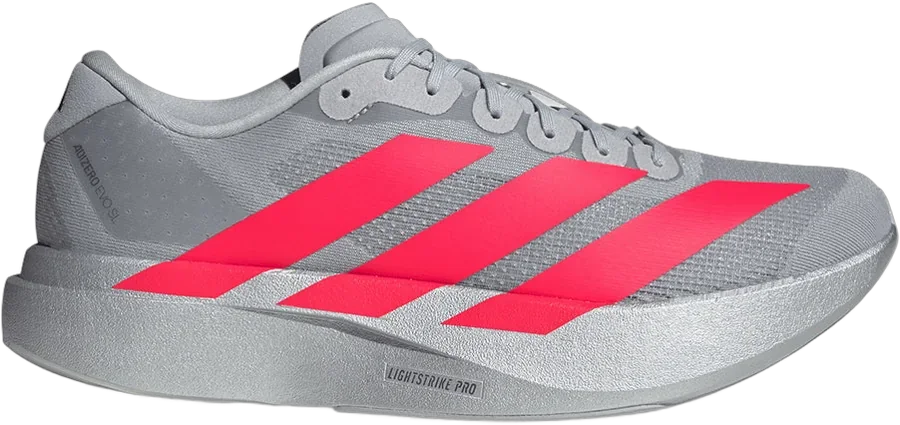 adidasAdizero Evo SLLightweight / tempo93/100 · 2 reviews
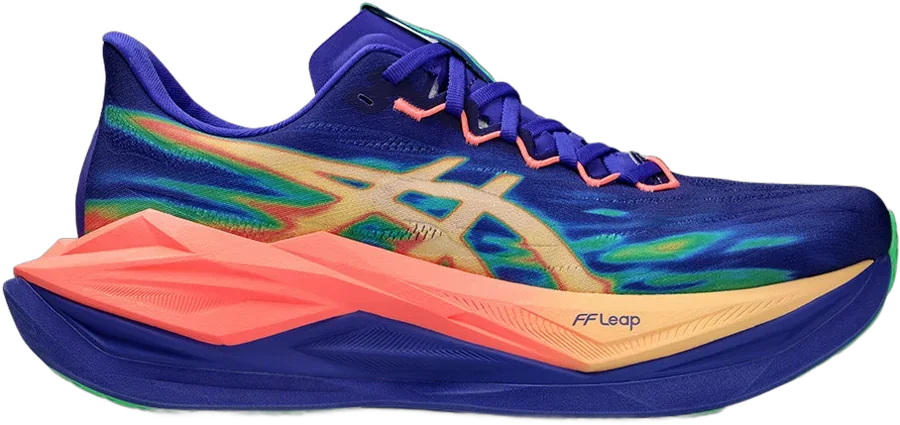 ASICSSuperblast 3Super trainer97/100 · 1 review
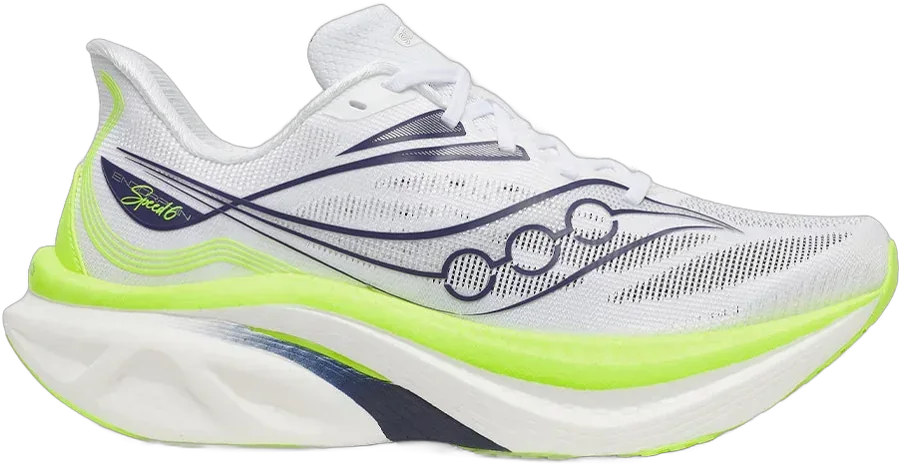
 SauconyEndorphin Speed 6Super trainer
Note that some super trainers exceed 40mm of stack height. They are fine for training, parkrun and most mass-participation races, but not for World Athletics-sanctioned elite competition.
Who each shoe is for
Every runner needs a daily trainer. A super shoe is an optional upgrade for runners chasing a time.
A daily trainer is for you if…
- You are new to running or returning after a break
- Most of your running is at easy or steady pace
- You want one shoe for everything and value durability
- You are on a budget
A super shoe is for you if…
- You have a race with a time goal, from 10K to marathon
- You already have a solid base of training in regular shoes
- You run at paces fast enough to get the most from the foam and plate
- You are happy to pay more for a shoe you will mainly use on race day
Building a rotation
You do not have to choose one. Rotating shoes lets each pair suit a different job, spreads wear and varies the load on your legs. A simple approach:
| Your running | Suggested rotation |
|---|---|
| 2–3 runs a week, no race | One daily trainer, e.g. Brooks Ghost 18 or Nike Pegasus 42 |
| 3–4 runs a week, the odd parkrun or 10K | Daily trainer + super trainer, e.g. Saucony Ride 19 + Adidas Evo SL |
| Training for a half or full marathon | Daily trainer + super trainer for workouts + super shoe for race day, e.g. Asics Novablast 6 + Endorphin Speed 6 + Adios Pro 5 |
| High mileage, several sessions a week | Two daily trainers to alternate + super trainer + super shoe |
Not sure where to start? The shoe finder suggests your two best matches based on how often you run, your pace and your budget.
Super shoes vs daily trainers: FAQs
Can I use a super shoe as a daily trainer?
You can, but it is an expensive way to wear out a race shoe, and the minimal outsole and soft foam are not built for daily miles. A super trainer is a better compromise.
Are super shoes worth it for slower runners?
They can still help, but research suggests the benefit is smaller at slower speeds. A comfortable super trainer may give you more value for money.
Can I race in a daily trainer?
Absolutely. Plenty of runners race in their daily trainers, and comfort and familiarity count for a lot over long distances.
How long do super shoes last?
Not as long as daily trainers. Many runners save them for key sessions and races so they stay fresh for when it counts.
What is the difference between a super shoe and a super trainer?
A super shoe is a pure racer: lightest weight, most aggressive plate. A super trainer uses similar foam in a heavier, more durable and more stable build for training.
Do I need a carbon plate?
No. Plates help stabilise soft race foams, but plateless shoes like the Adidas Evo SL and Asics Superblast 3 are hugely popular.
Sources
- SportsShoes: Nike Alphafly 4 first look
- Marathons.com: Adidas Adios Pro 5
- The Running Channel: what happened at the 2026 London Marathon
- Training Plan: best super trainers 2026
- Marathon Handbook: best super trainers 2026
- Supwell: alternatives to the Asics Sonicblast and Megablast
- Fit2Run: midsole foams and mileage
- Doctors of Running: super shoe research review
- Weights, stack heights and prices: RunShoeRotation’s own data on every current shoe (how we gather it)